



Graphitization Furnace Trends: Intelligent, Green, and Large-Scale
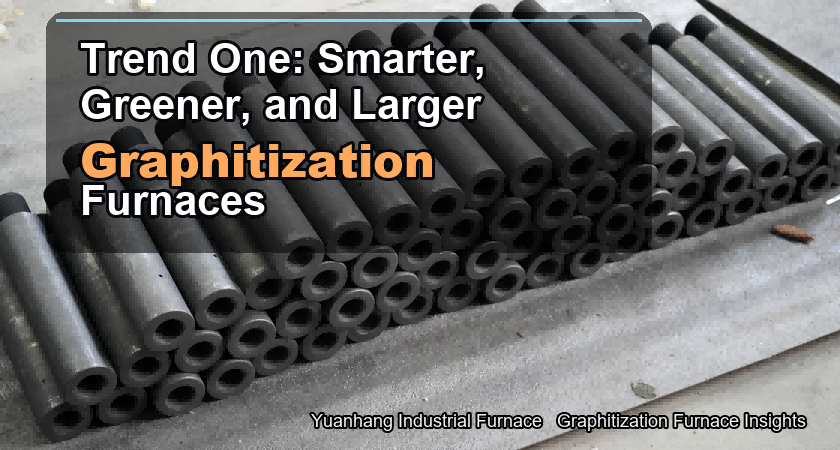
After decades of development, the graphitization furnace industry is entering a new period of technological transformation. The development in the next few years will present three major trends.
Artificial intelligence and big data technologies are penetrating the graphitization furnace field:
AI Process Optimization: Analyzing historical data through machine learning automatically optimizes temperature curves and atmosphere parameters, improving product consistency and yield.
Predictive Maintenance: Predicting equipment failures based on sensor data, scheduling maintenance in advance, and reducing unplanned downtime.
What the source article emphasizes
The Chinese source focuses on practical furnace selection and operation, not on a simple word-for-word product description. The important point is to understand how each specification affects real batch quality, operating cost, maintenance, and safety.
- Trend Two: Green Development
- Trend 3: Larger Size
Key technical points
- Energy Saving and Consumption Reduction: High-efficiency insulation, IGBT power supply, heat recovery, and other technologies reduce energy consumption.
- Exhaust Gas Treatment: A complete exhaust gas treatment system meets environmental emission standards.
- Waste Heat Utilization: Recovering waste heat from cooling water and exhaust gas for use in other processes.
- Low Emission Design: Reducing pollutant generation from the design stage.
- Photovoltaic Industry: Large-size silicon wafers require large-diameter hot zone components
- Lithium Battery Industry: Explosive demand for anode materials necessitates large-capacity equipment
- Economies of Scale: The larger the single furnace capacity, the lower the unit cost
Engineering interpretation for overseas buyers
Digital Twin: Establishing a digital model of the equipment to simulate and optimize operating status in real time.
Intelligent Quality Inspection: Monitoring product performance online and adjusting process parameters in real time.
Environmental pressures are driving the development of graphitization furnaces towards a greener approach:
Downstream industry demand drives the development of graphitization furnaces towards larger sizes:
For an English industrial furnace website, this topic should be presented in a way that helps the reader make a specification decision. That means connecting the furnace feature with material behavior, production rhythm, utility conditions, acceptance testing, and long-term maintenance.
Specification and acceptance checklist
- Compare IGBT and SCR power systems by power factor, harmonic impact, cabinet size, control precision, and lifetime cost.
- If SCR is selected, evaluate whether APF harmonic filtering and extra electrical room space are required.
- Power quality is not only an electricity issue; it can affect instruments, sensors, and production stability.
- Cooling water should be monitored by flow, pressure, and temperature, not only by pump running status.
- Independent circuits are preferred for the shell, induction coil, power cabinet, and key electrical components.
- Emergency or redundant cooling should be considered for high-value batches and unattended operation.
- Heating elements and insulation determine maximum temperature, power consumption, maintenance interval, and batch cost.
- Consumable life depends on peak temperature, atmosphere purity, heating and cooling rate, and material volatility.
Questions to confirm before ordering
- What material will be treated, and what quality indicators must be reached after graphitization?
- What temperature curve, holding time, atmosphere, vacuum level, cooling method, and loading density are required?
- Which data will be recorded for each batch, and which acceptance tests will prove stable performance?
- Which spare parts, consumables, alarms, and maintenance checks are needed for long-term operation?
Engineering takeaway
A graphitization furnace should be specified as a complete high-temperature process system. When the buyer defines the material, process window, utilities, safety logic, and acceptance method clearly, the furnace is easier to operate, easier to troubleshoot, and more reliable in repeated production.



