



Handling Fluorine and Chlorine Materials in Graphitization Furnaces
Two years ago, in the autumn, a customer's equipment, which produced fluorine-containing precursor materials, developed extensive corrosion on the surface of its induction coil within six months, and the sealing rings aged and cracked. The cause was the generation of hydrogen fluoride gas in the process, which conventional graphitization furnaces could not withstand.
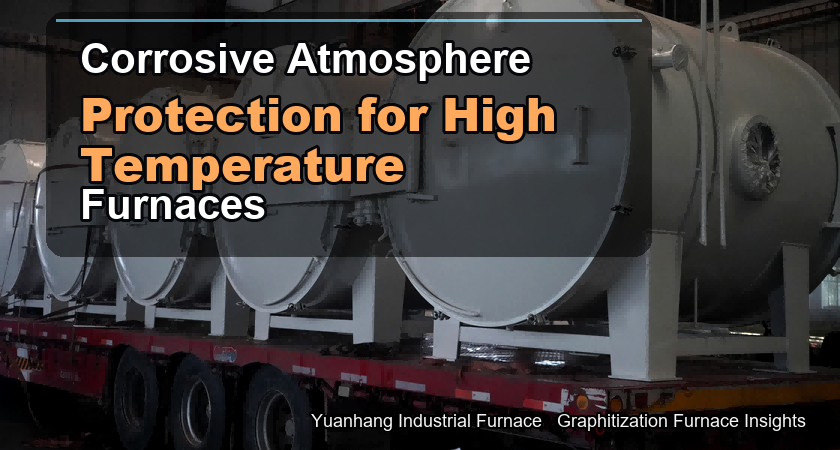
Hydrogen fluoride and hydrogen chloride are highly corrosive media at high temperatures, directly attacking metallic materials and causing pitting corrosion, intergranular corrosion, and even stress corrosion cracking.
Once the surface of the induction coil is corroded, its resistance increases, its heating efficiency decreases, and in severe cases, localized overheating may cause it to burn out.
The coil surface is treated with a Teflon coating or a ceramic coating to form a dense protective film, completely isolating corrosive gases from the metal coil.
What the source article emphasizes
The Chinese source focuses on practical furnace selection and operation, not on a simple word-for-word product description. The important point is to understand how each specification affects real batch quality, operating cost, maintenance, and safety.
- Corrosion Principle
- 3?? Sealing System Upgrade
- 4?? Exhaust System Enhancement
Key technical points
- Use vacuum mainly for degassing, impurity removal, and low-temperature process stages.
- At very high temperatures, slight positive argon pressure can suppress graphite sublimation and prevent oxidation.
- The furnace control logic should make atmosphere switching repeatable rather than depending on operator memory.
- Leak checking before heating is essential when processing high-value graphite or carbon materials.
- Water-cooled flanges and suitable O-rings help keep sealing parts below their thermal aging limit.
- A small air leak can oxidize the batch, so sealing design and maintenance records should be part of acceptance.
- Volatile gas, tar, and dust control should be designed according to actual material chemistry.
- Condensation, filtration, and thermal oxidation are often combined rather than used as isolated devices.
Engineering interpretation for overseas buyers
The coating thickness should be uniform, without bubbles or cracks. The service life is generally 1-2 years, after which recoating is required.
2?? Furnace Shell Inner Wall Corrosion Protection
A high-temperature resistant anti-corrosion coating is added to the inner wall of the furnace shell.
During construction, surface treatment must be done properly-rust removal, degreasing, and polishing are all essential steps.
For an English industrial furnace website, this topic should be presented in a way that helps the reader make a specification decision. That means connecting the furnace feature with material behavior, production rhythm, utility conditions, acceptance testing, and long-term maintenance.
Specification and acceptance checklist
- Use vacuum mainly for degassing, impurity removal, and low-temperature process stages.
- At very high temperatures, slight positive argon pressure can suppress graphite sublimation and prevent oxidation.
- The furnace control logic should make atmosphere switching repeatable rather than depending on operator memory.
- Leak checking before heating is essential when processing high-value graphite or carbon materials.
- Water-cooled flanges and suitable O-rings help keep sealing parts below their thermal aging limit.
- A small air leak can oxidize the batch, so sealing design and maintenance records should be part of acceptance.
- Volatile gas, tar, and dust control should be designed according to actual material chemistry.
- Condensation, filtration, and thermal oxidation are often combined rather than used as isolated devices.
Questions to confirm before ordering
- What material will be treated, and what quality indicators must be reached after graphitization?
- What temperature curve, holding time, atmosphere, vacuum level, cooling method, and loading density are required?
- Which data will be recorded for each batch, and which acceptance tests will prove stable performance?
- Which spare parts, consumables, alarms, and maintenance checks are needed for long-term operation?
Engineering takeaway
A graphitization furnace should be specified as a complete high-temperature process system. When the buyer defines the material, process window, utilities, safety logic, and acceptance method clearly, the furnace is easier to operate, easier to troubleshoot, and more reliable in repeated production.



