



Input Voltage Fluctuation Tolerance in Graphitization Furnaces
Voltage fluctuations during the graphitization process cause many users to worry that our graphitization furnace will ultimately affect the uniformity of graphitization in the product and the stability of the equipment itself.
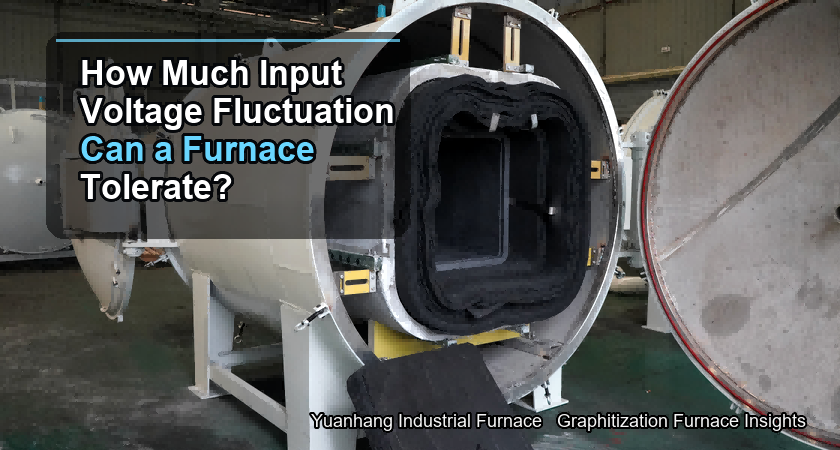
. The internal closed-loop control system detects changes in input voltage in real time. When the grid voltage rises, it automatically reduces the conduction time; when the voltage drops, it increases the conduction time, maintaining a
. The entire process has a millisecond-level response, which is imperceptible to humans.
This voltage regulation system can handle input voltage fluctuations of ±15%. This range is more than sufficient for most industrial power grids. Unless the power grid is extremely faulty (fluctuations exceeding 20%), it will not affect the normal switching on and off of power devices.
What the source article emphasizes
The Chinese source focuses on practical furnace selection and operation, not on a simple word-for-word product description. The important point is to understand how each specification affects real batch quality, operating cost, maintenance, and safety.
- Adaptive Voltage Regulation Function
- ±15% Fluctuation Tolerance
- Process Stability Guarantee
Key technical points
- Compare IGBT and SCR power systems by power factor, harmonic impact, cabinet size, control precision, and lifetime cost.
- If SCR is selected, evaluate whether APF harmonic filtering and extra electrical room space are required.
- Power quality is not only an electricity issue; it can affect instruments, sensors, and production stability.
- Confirm the process temperature, holding time, atmosphere, loading volume, and product quality indicators before comparing suppliers.
- Ask which indicators will be tested at the factory, which will be tested on site, and which need production verification.
- Keep one complete batch record for temperature, pressure, power, atmosphere, cooling water, alarms, and operator actions.
- Treat power supply, furnace body, vacuum, gas, cooling, control, and safety as one integrated system.
Engineering interpretation for overseas buyers
All control circuit power supplies are stepped down from high voltage to low voltage; a 15% fluctuation will not affect the stability of the control circuit at all.
The fundamental factor affecting product stability is temperature fluctuation, not voltage fluctuation. The temperature controller will automatically adjust its output based on power or voltage fluctuations.
Voltage fluctuations of less than 15% are not a problem: Because most graphitization furnaces operate at constant power output, the temperature controller will automatically adjust the output based on power or voltage fluctuations.
For an English industrial furnace website, this topic should be presented in a way that helps the reader make a specification decision. That means connecting the furnace feature with material behavior, production rhythm, utility conditions, acceptance testing, and long-term maintenance.
Specification and acceptance checklist
- Compare IGBT and SCR power systems by power factor, harmonic impact, cabinet size, control precision, and lifetime cost.
- If SCR is selected, evaluate whether APF harmonic filtering and extra electrical room space are required.
- Power quality is not only an electricity issue; it can affect instruments, sensors, and production stability.
- Confirm the process temperature, holding time, atmosphere, loading volume, and product quality indicators before comparing suppliers.
- Ask which indicators will be tested at the factory, which will be tested on site, and which need production verification.
- Keep one complete batch record for temperature, pressure, power, atmosphere, cooling water, alarms, and operator actions.
- Treat power supply, furnace body, vacuum, gas, cooling, control, and safety as one integrated system.
Questions to confirm before ordering
- What material will be treated, and what quality indicators must be reached after graphitization?
- What temperature curve, holding time, atmosphere, vacuum level, cooling method, and loading density are required?
- Which data will be recorded for each batch, and which acceptance tests will prove stable performance?
- Which spare parts, consumables, alarms, and maintenance checks are needed for long-term operation?
Engineering takeaway
A graphitization furnace should be specified as a complete high-temperature process system. When the buyer defines the material, process window, utilities, safety logic, and acceptance method clearly, the furnace is easier to operate, easier to troubleshoot, and more reliable in repeated production.



