



Graphitization Furnace Applications in Metallurgy
Graphite materials, due to their high temperature resistance, corrosion resistance, and thermal and electrical conductivity, are widely used in the metallurgical industry. From protective sleeves to heating elements, from crucibles to flow guides, graphitization is a key process that determines the performance of these components.
For the harsh working conditions of metallurgical applications, the graphitization process requires special attention to:
Characteristics: The unique aspect of metallurgical graphite lies in finding a balance between strength, corrosion resistance, and thermal shock resistance. The graphitization process should not blindly pursue a high degree of graphitization; sometimes, appropriately reducing the degree of graphitization can actually improve thermal shock resistance.
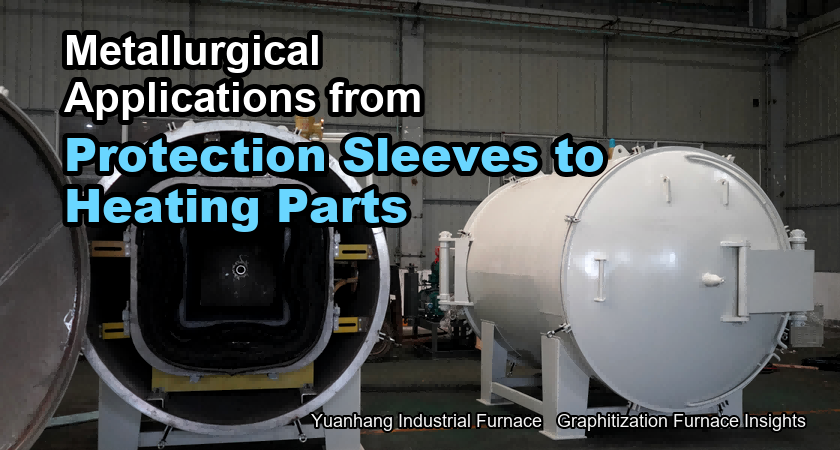
What the source article emphasizes
The Chinese source focuses on practical furnace selection and operation, not on a simple word-for-word product description. The important point is to understand how each specification affects real batch quality, operating cost, maintenance, and safety.
- Main Applications
- Harsh working environment for metallurgical graphite
- Key Points of Graphitization Process
Key technical points
- Protective Sleeve: Used for thermocouple protection and temperature measurement in high-temperature melts
- Heating Element: Used as a heating element in resistance furnaces and induction furnaces
- Crucible: Used for smelting precious metals and rare earth metals
- Flow Guide: Used in continuous casting processes to guide the flow of molten steel
- Sealing Ring: Used for high-temperature and high-pressure sealing
- High temperature: Working temperature is typically 1500-2000 °C
- Corrosion: Severe chemical corrosion due to contact with molten metal and slag
- Mechanical impact: Collisions during loading and unloading processes
Engineering interpretation for overseas buyers
For an English industrial furnace website, this topic should be presented in a way that helps the reader make a specification decision. That means connecting the furnace feature with material behavior, production rhythm, utility conditions, acceptance testing, and long-term maintenance.
Specification and acceptance checklist
- Leak checking before heating is essential when processing high-value graphite or carbon materials.
- Water-cooled flanges and suitable O-rings help keep sealing parts below their thermal aging limit.
- A small air leak can oxidize the batch, so sealing design and maintenance records should be part of acceptance.
- Heating elements and insulation determine maximum temperature, power consumption, maintenance interval, and batch cost.
- Consumable life depends on peak temperature, atmosphere purity, heating and cooling rate, and material volatility.
- Spare hot-zone parts should be discussed during procurement, not only after the first failure.
- Loading density must be balanced with temperature uniformity and gas flow.
- Fixtures, spacing, and product orientation can affect both quality and cycle time.
Questions to confirm before ordering
- What material will be treated, and what quality indicators must be reached after graphitization?
- What temperature curve, holding time, atmosphere, vacuum level, cooling method, and loading density are required?
- Which data will be recorded for each batch, and which acceptance tests will prove stable performance?
- Which spare parts, consumables, alarms, and maintenance checks are needed for long-term operation?
Engineering takeaway
A graphitization furnace should be specified as a complete high-temperature process system. When the buyer defines the material, process window, utilities, safety logic, and acceptance method clearly, the furnace is easier to operate, easier to troubleshoot, and more reliable in repeated production.



