



A Practical Decision Framework for Buying a Graphitization Furnace
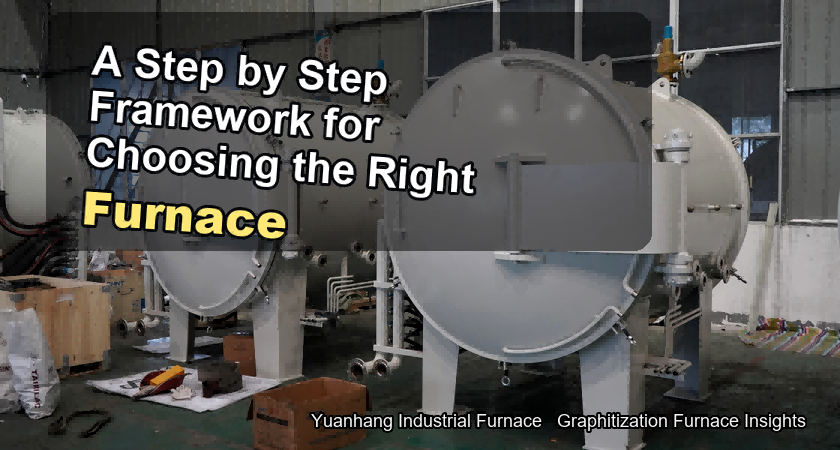
Buying a graphitization furnace is a significant investment, and the decision-making process should be scientific and systematic. The following five-step framework will help you choose the right equipment.
(Graphitization degree, purity, strength, etc.)
Atmosphere requirements? (Vacuum degree, gas type, purity)
Special requirements? (Corrosive atmosphere, rapid cooling, continuous operation, etc.)
What the source article emphasizes
The Chinese source focuses on practical furnace selection and operation, not on a simple word-for-word product description. The important point is to understand how each specification affects real batch quality, operating cost, maintenance, and safety.
- Graphitization Furnace Selection Decision Framework: Five Steps to Choose the Right Equipment
- Step 1: Clarify Process Requirements
- Step 5: Examine After-Sales Service
Key technical points
- What materials will be processed? (Isostatic graphite, carbon fiber, C/C composite materials, or other materials, etc.)
- Target temperature? (Typically 2500-3200 °C)
- Product performance indicators?
- Does the local service network exist?
- Response time commitment
- Spare parts supply capability
- Remote diagnostic capability
- Training service
Engineering interpretation for overseas buyers
Current Capacity Requirements (kg/day or pieces/day)
Expected Capacity Growth in the Next 3-5 Years
Equipment Utilization Target (Recommended ≥70%)
Product Changeover Frequency (Affects Automation Configuration)
For an English industrial furnace website, this topic should be presented in a way that helps the reader make a specification decision. That means connecting the furnace feature with material behavior, production rhythm, utility conditions, acceptance testing, and long-term maintenance.
Specification and acceptance checklist
- Use vacuum mainly for degassing, impurity removal, and low-temperature process stages.
- At very high temperatures, slight positive argon pressure can suppress graphite sublimation and prevent oxidation.
- The furnace control logic should make atmosphere switching repeatable rather than depending on operator memory.
- Heating elements and insulation determine maximum temperature, power consumption, maintenance interval, and batch cost.
- Consumable life depends on peak temperature, atmosphere purity, heating and cooling rate, and material volatility.
- Spare hot-zone parts should be discussed during procurement, not only after the first failure.
- Digital interfaces should provide useful production data, not just a remote screen view.
- Temperature curves, power data, pressure trends, alarms, and operator actions are valuable for quality traceability.
Questions to confirm before ordering
- What material will be treated, and what quality indicators must be reached after graphitization?
- What temperature curve, holding time, atmosphere, vacuum level, cooling method, and loading density are required?
- Which data will be recorded for each batch, and which acceptance tests will prove stable performance?
- Which spare parts, consumables, alarms, and maintenance checks are needed for long-term operation?
Engineering takeaway
A graphitization furnace should be specified as a complete high-temperature process system. When the buyer defines the material, process window, utilities, safety logic, and acceptance method clearly, the furnace is easier to operate, easier to troubleshoot, and more reliable in repeated production.



