



Digital Transformation in the High-Temperature Furnace Industry
Traditional graphitization production heavily relies on the experience of master craftsmen-when to heat up, when to hold, and when to cool down-all based on intuition. This approach has two fatal flaws: first, the experience is lost when the master craftsmen retire; second, human intuition is prone to error, resulting in poor batch-to-batch consistency.
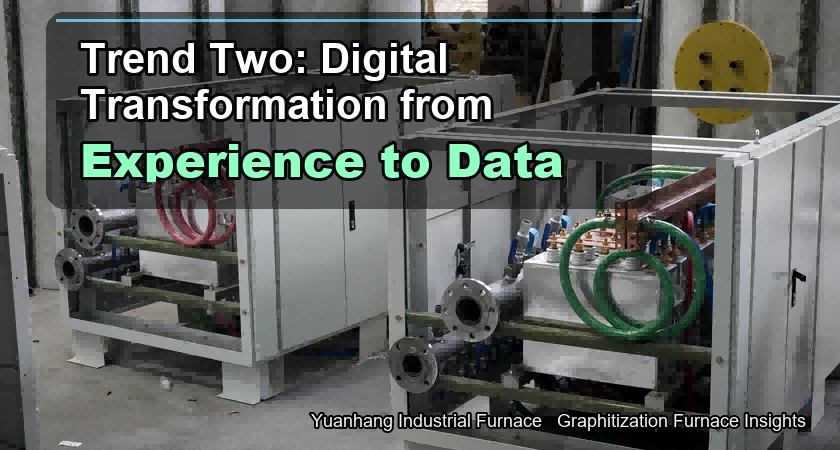
Digital transformation is changing all of this.
Deploying a comprehensive sensor network on the graphitization furnace:
All data is sampled at the second level and automatically stored to form a complete data asset.
What the source article emphasizes
The Chinese source focuses on practical furnace selection and operation, not on a simple word-for-word product description. The important point is to understand how each specification affects real batch quality, operating cost, maintenance, and safety.
- Data Acquisition: Full-Process Coverage
- Data Analysis: From Data to Insight
- Digital Twin: Virtual Optimization of Reality
Key technical points
- Temperature: Real-time monitoring of temperature at multiple points
- Pressure: Furnace pressure, gas pressure
- Flow Rate: Gas flow rate for each path
- Power: Power output power
- Atmosphere: Gas composition, dew point, oxygen content
- Process Optimization: Analyze historical suitable processes to find the optimal parameter combination
- Quality Prediction: Predict product quality based on real-time data and adjust in advance
- Anomaly Detection: Automatically identify anomalies that deviate from the normal pattern
Engineering interpretation for overseas buyers
Through a data analysis platform, achieve the following:
Establish a digital twin model of the graphitization furnace-simulate equipment operation in a virtual environment, test new process solutions, find the optimal parameters, and then apply them to the actual equipment. This greatly reduces the trial-and-error costs of process development.
Value: Typical results of implementing digital transformation include: a 5-10% increase in yield, a 10-15% reduction in energy consumption, and a 30% shortening of process development cycles. Digital transformation is not just about spending money; it's a strategic initiative with a high return on investment. With the advent of the AI era and the support of AI intelligent agents, this iterative speed will advance even more rapidly.
For an English industrial furnace website, this topic should be presented in a way that helps the reader make a specification decision. That means connecting the furnace feature with material behavior, production rhythm, utility conditions, acceptance testing, and long-term maintenance.
Specification and acceptance checklist
- At about 3000 °C, stable power, high-purity argon, low dew point, and reliable cooling must work as one system.
- For high-purity graphite work, confirm oxygen and moisture control before loading valuable material.
- Nitrogen should not be treated as a simple substitute for argon in ultra-high-temperature graphite service.
- Heating elements and insulation determine maximum temperature, power consumption, maintenance interval, and batch cost.
- Consumable life depends on peak temperature, atmosphere purity, heating and cooling rate, and material volatility.
- Spare hot-zone parts should be discussed during procurement, not only after the first failure.
- Energy tracking should be recorded by furnace, batch, recipe, and product type.
- The suitable heating curve is not always the fastest curve or the slowest curve; it should be proven by data.
Questions to confirm before ordering
- What material will be treated, and what quality indicators must be reached after graphitization?
- What temperature curve, holding time, atmosphere, vacuum level, cooling method, and loading density are required?
- Which data will be recorded for each batch, and which acceptance tests will prove stable performance?
- Which spare parts, consumables, alarms, and maintenance checks are needed for long-term operation?
Engineering takeaway
A graphitization furnace should be specified as a complete high-temperature process system. When the buyer defines the material, process window, utilities, safety logic, and acceptance method clearly, the furnace is easier to operate, easier to troubleshoot, and more reliable in repeated production.



