



How Long Do Graphite Consumables Last in a Graphitization Furnace?
The insulation material and graphite crucible in the graphitization furnace basically break down at the same time, and they also need to be removed at the same time. As consumables for high-temperature graphitization furnaces, their lifespan: how long can the heating element actually be used?
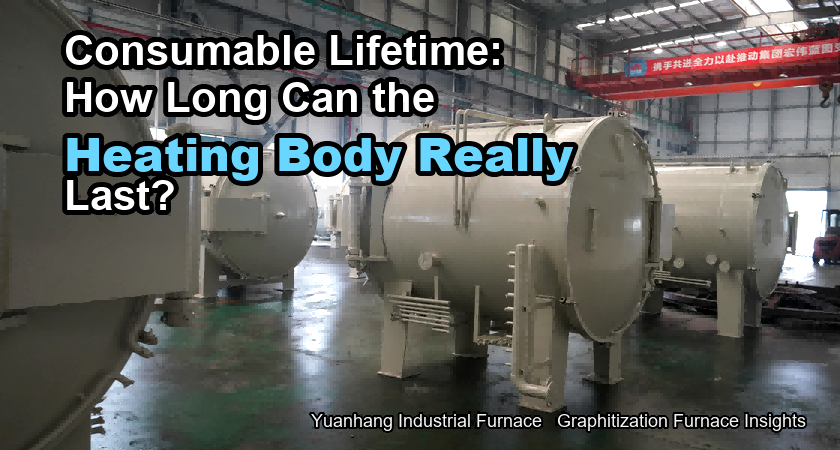
A couple of days ago, while organizing the warehouse, I saw a pile of discarded graphite heating element remnants, their surfaces covered with fine cracks and ablation marks. Some were deformed and twisted, and some were broken into several pieces. Each one carries the memory of hundreds of furnace cycles. This reminded me of the same question many customers ask when selecting equipment: how long can these core consumables actually be used? Today, I'll discuss this topic openly because the lifespan of consumables directly affects your production cost accounting.
The normal lifespan of graphite heating elements and insulation materials ranges from 50 to 200 heat cycles, a very large difference. There are four core factors affecting lifespan:
Compared to 2600 °C, the sublimation rate and thermal stress of the heating element at 3000 °C are on completely different orders of magnitude. For every 100 °C increase in temperature, the oxidation rate and mechanical strength degradation of graphite materials accelerate significantly. A heating element operating at 3000 °C may only have a lifespan of one-third that at 2600 °C.
What the source article emphasizes
The Chinese source focuses on practical furnace selection and operation, not on a simple word-for-word product description. The important point is to understand how each specification affects real batch quality, operating cost, maintenance, and safety.
- Normal Lifespan Range
- Four Major Influencing Factors
- 1?? Maximum Operating Temperature
- 2?? Protecting Atmosphere Purity
- 3?? Heating and Cooling Rate
Key technical points
- At about 3000 °C, stable power, high-purity argon, low dew point, and reliable cooling must work as one system.
- For high-purity graphite work, confirm oxygen and moisture control before loading valuable material.
- Nitrogen should not be treated as a simple substitute for argon in ultra-high-temperature graphite service.
- Use vacuum mainly for degassing, impurity removal, and low-temperature process stages.
- At very high temperatures, slight positive argon pressure can suppress graphite sublimation and prevent oxidation.
- The furnace control logic should make atmosphere switching repeatable rather than depending on operator memory.
- Leak checking before heating is essential when processing high-value graphite or carbon materials.
- Water-cooled flanges and suitable O-rings help keep sealing parts below their thermal aging limit.
Engineering interpretation for overseas buyers
Even trace amounts of oxygen or water vapor will react with graphite at high temperatures, gradually eroding the surface of the heating element. Increasing the atmosphere purity from 99.99% to 99.999% can extend the lifespan of the heating element by more than 30%. This is why we repeatedly emphasize the importance of argon purity.
Rapid heating and cooling are the bane of heating elements. Rapid temperature changes generate enormous thermal stress within the graphite material, leading to cracks and fractures. It is recommended to use a gradual heating and cooling curve, especially during the cooling phase, with the rate controlled below 3-5 °C/min.
Materials containing volatile substances (such as carbon materials containing binders) release gases at high temperatures that can corrode the surface of the heating element, accelerating wear and tear. Handling these materials requires more frequent maintenance and shorter service life.
Life Extension Recommendations: Smooth heating and cooling, ensuring a high-purity atmosphere, avoiding overload operation, regular inspection and cleaning, and most importantly, requiring good operating habits from workshop operators. During vacuum conversion, allow a longer replacement time and ensure thorough replacement. Depending on the product process, avoid removing the material from the furnace when the core temperature exceeds 300 degrees Celsius, as this easily allows external air to enter and cause oxidation. The cost of consumables per use may only account for 5-20% of the processing cost, but by extending life by 50% through good operation, the annual savings can reach hundreds of thousands.
For an English industrial furnace website, this topic should be presented in a way that helps the reader make a specification decision. That means connecting the furnace feature with material behavior, production rhythm, utility conditions, acceptance testing, and long-term maintenance.
Specification and acceptance checklist
- At about 3000 °C, stable power, high-purity argon, low dew point, and reliable cooling must work as one system.
- For high-purity graphite work, confirm oxygen and moisture control before loading valuable material.
- Nitrogen should not be treated as a simple substitute for argon in ultra-high-temperature graphite service.
- Use vacuum mainly for degassing, impurity removal, and low-temperature process stages.
- At very high temperatures, slight positive argon pressure can suppress graphite sublimation and prevent oxidation.
- The furnace control logic should make atmosphere switching repeatable rather than depending on operator memory.
- Leak checking before heating is essential when processing high-value graphite or carbon materials.
- Water-cooled flanges and suitable O-rings help keep sealing parts below their thermal aging limit.
Questions to confirm before ordering
- What material will be treated, and what quality indicators must be reached after graphitization?
- What temperature curve, holding time, atmosphere, vacuum level, cooling method, and loading density are required?
- Which data will be recorded for each batch, and which acceptance tests will prove stable performance?
- Which spare parts, consumables, alarms, and maintenance checks are needed for long-term operation?
Engineering takeaway
A graphitization furnace should be specified as a complete high-temperature process system. When the buyer defines the material, process window, utilities, safety logic, and acceptance method clearly, the furnace is easier to operate, easier to troubleshoot, and more reliable in repeated production.



