



Emergency Protection for Graphitization Furnaces During Power Loss
Graphitization Furnace Emergency Protection: What to Do in Case of a Sudden Power Outage? Attentive Customers Care Most, While Daring Customers Ignore It
Last summer, an old customer called late at night, saying that a sudden rainstorm had caused a regional power outage in the factory area, and the graphitization furnace was operating at a temperature of over 2800 degrees Celsius. His voice was very urgent on the other end of the phone, but I reassured him-he might not be a frequent visitor to the workshop and might not be familiar with his high-temperature experimental graphitization furnace. Because I knew his equipment had a complete emergency protection mechanism, which was automatically working at that moment. Later, he said that seeing the equipment safely weather the emergency finally put his mind at ease.
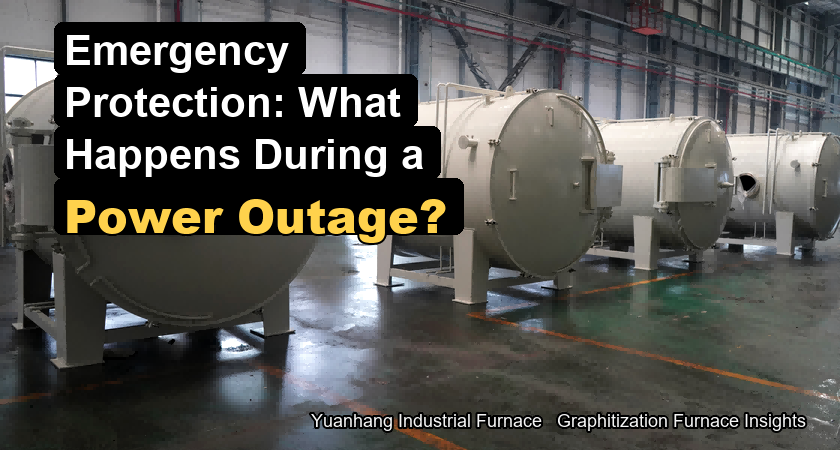
Graphitization furnaces operate at extremely high temperatures, and any sudden situation could have serious consequences. We can provide customers with a
to ensure the safety of equipment and products under various extreme conditions.
What the source article emphasizes
The Chinese source focuses on practical furnace selection and operation, not on a simple word-for-word product description. The important point is to understand how each specification affects real batch quality, operating cost, maintenance, and safety.
- Process background
- Specification focus
- Operation and acceptance
Key technical points
- At about 3000 °C, stable power, high-purity argon, low dew point, and reliable cooling must work as one system.
- For high-purity graphite work, confirm oxygen and moisture control before loading valuable material.
- Nitrogen should not be treated as a simple substitute for argon in ultra-high-temperature graphite service.
- Leak checking before heating is essential when processing high-value graphite or carbon materials.
- Water-cooled flanges and suitable O-rings help keep sealing parts below their thermal aging limit.
- A small air leak can oxidize the batch, so sealing design and maintenance records should be part of acceptance.
- Cooling water should be monitored by flow, pressure, and temperature, not only by pump running status.
- Independent circuits are preferred for the shell, induction coil, power cabinet, and key electrical components.
Engineering interpretation for overseas buyers
, which automatically takes over power supply when the main power fails, ensuring the normal operation of the control system, critical sensors, and safety interlock devices for at least
30-60 minutes (depending on the configuration, some configurations can last 2-3 hours)
. This 30-60 minutes is sufficient for the system to execute a complete emergency procedure-automatically cutting off the heating power, recording the current status, and issuing an alarm signal.
Cooling water interruption is one of the most dangerous situations. In addition to the main water pump, we have also designed an
For an English industrial furnace website, this topic should be presented in a way that helps the reader make a specification decision. That means connecting the furnace feature with material behavior, production rhythm, utility conditions, acceptance testing, and long-term maintenance.
Specification and acceptance checklist
- At about 3000 °C, stable power, high-purity argon, low dew point, and reliable cooling must work as one system.
- For high-purity graphite work, confirm oxygen and moisture control before loading valuable material.
- Nitrogen should not be treated as a simple substitute for argon in ultra-high-temperature graphite service.
- Leak checking before heating is essential when processing high-value graphite or carbon materials.
- Water-cooled flanges and suitable O-rings help keep sealing parts below their thermal aging limit.
- A small air leak can oxidize the batch, so sealing design and maintenance records should be part of acceptance.
- Cooling water should be monitored by flow, pressure, and temperature, not only by pump running status.
- Independent circuits are preferred for the shell, induction coil, power cabinet, and key electrical components.
Questions to confirm before ordering
- What material will be treated, and what quality indicators must be reached after graphitization?
- What temperature curve, holding time, atmosphere, vacuum level, cooling method, and loading density are required?
- Which data will be recorded for each batch, and which acceptance tests will prove stable performance?
- Which spare parts, consumables, alarms, and maintenance checks are needed for long-term operation?
Engineering takeaway
A graphitization furnace should be specified as a complete high-temperature process system. When the buyer defines the material, process window, utilities, safety logic, and acceptance method clearly, the furnace is easier to operate, easier to troubleshoot, and more reliable in repeated production.



