



Alarm Systems as 24-Hour Health Monitoring for Furnaces
Last month, I received a call from a customer's workshop operator. He sounded very anxious. He said the furnace alarm was going off, and a code was flashing on the screen that the operator couldn't understand. We had him follow the on-screen instructions step by step to troubleshoot, and finally found that the filter was clogged. Replacing the filter element solved the problem. The whole process took about twenty minutes, without disrupting production.
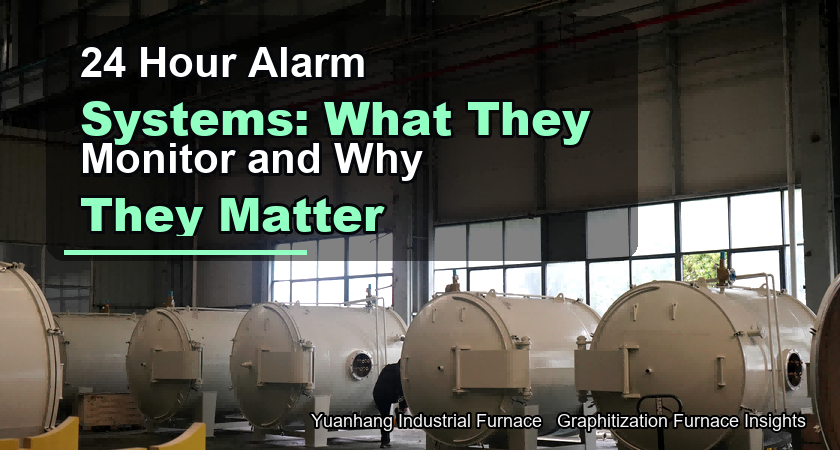
This incident made me want to talk about alarm systems in general-they're not just something that "beeps once," but a complete intelligent diagnostic and guidance system.
Prompt Parameter Approaching Limit Gentle audio-visual alert, log recording
Warning Parameter deviates from normal range Significant audio-visual alarm, manual confirmation required
What the source article emphasizes
The Chinese source focuses on practical furnace selection and operation, not on a simple word-for-word product description. The important point is to understand how each specification affects real batch quality, operating cost, maintenance, and safety.
- Alarm System: A 24-Hour Health Consultant for Graphitization Furnaces
- Three-Level Early Warning Mechanism
- Guided Troubleshooting
- Historical Alarm Analysis
Key technical points
- Check if the cooling water pump is running normally and if the motor is rotating.
- Check for leaks at all pipe connections.
- Check if the filter is clogged and needs cleaning or replacement.
- Check if the inlet valve is fully open.
Engineering interpretation for overseas buyers
Over-limit Parameter exceeds safety limit Strong alarm + automatic shutdown protection
For each alarm type, the system doesn't just display a code, but provides detailed guided troubleshooting steps. Taking "Low Cooling Water Flow" as an example, the system will guide you step-by-step:
Operators simply need to follow the prompts; they don't need to rely on their own experience.
All alarm information is completely recorded by the system and can be queried by time and filtered by type.
For an English industrial furnace website, this topic should be presented in a way that helps the reader make a specification decision. That means connecting the furnace feature with material behavior, production rhythm, utility conditions, acceptance testing, and long-term maintenance.
Specification and acceptance checklist
- Cooling water should be monitored by flow, pressure, and temperature, not only by pump running status.
- Independent circuits are preferred for the shell, induction coil, power cabinet, and key electrical components.
- Emergency or redundant cooling should be considered for high-value batches and unattended operation.
- Emergency design should cover power loss, cooling failure, gas interruption, overtemperature, and unsafe pressure.
- UPS, backup gas, safe sealing, and emergency cooling logic should be tested during commissioning.
- Alarm records should tell the operator what happened and what response is required.
- Confirm the process temperature, holding time, atmosphere, loading volume, and product quality indicators before comparing suppliers.
- Ask which indicators will be tested at the factory, which will be tested on site, and which need production verification.
Questions to confirm before ordering
- What material will be treated, and what quality indicators must be reached after graphitization?
- What temperature curve, holding time, atmosphere, vacuum level, cooling method, and loading density are required?
- Which data will be recorded for each batch, and which acceptance tests will prove stable performance?
- Which spare parts, consumables, alarms, and maintenance checks are needed for long-term operation?
Engineering takeaway
A graphitization furnace should be specified as a complete high-temperature process system. When the buyer defines the material, process window, utilities, safety logic, and acceptance method clearly, the furnace is easier to operate, easier to troubleshoot, and more reliable in repeated production.



