



Door Safety Interlocks for Graphitization Furnaces
The furnace door has multiple safety interlocks.
Last year, a customer from the south came to the workshop on a sweltering day to see a demonstration of the equipment. Standing in front of the furnace door, he half-jokingly said, "This is what I fear most. When the door opens, it's over 2000 degrees Celsius inside. Standing next to it feels like standing on a volcano!" I patted the furnace door and said, "Don't worry, our doors are harder to open than a bank safe deposit box, and you simply can't open them."
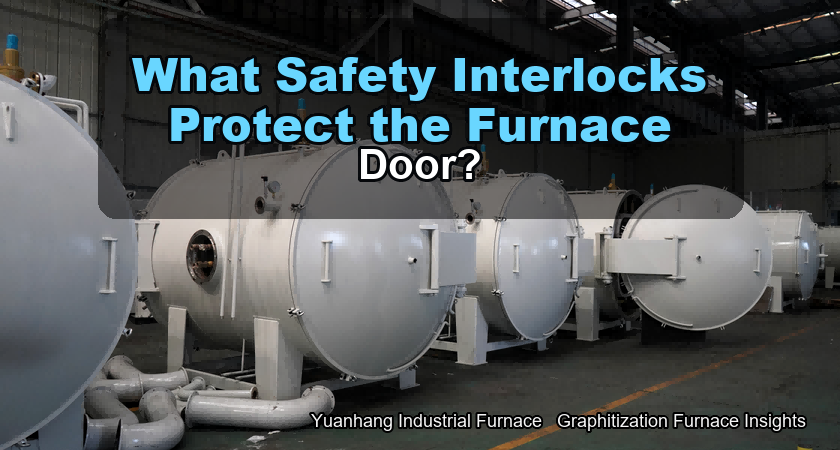
After the furnace door is closed, the handle must be rotated to the designated position according to the prescribed procedure to lock it. Once locked, the limit switch installed at the locking point detects this and sends a confirmation signal to the PLC. This is the starting point of the safety chain-without this signal, nothing can start.
Before starting heating and vacuum, the PLC hard logic checks three necessary conditions:
What the source article emphasizes
The Chinese source focuses on practical furnace selection and operation, not on a simple word-for-word product description. The important point is to understand how each specification affects real batch quality, operating cost, maintenance, and safety.
- What safety interlocks are there on the furnace door of the graphitization furnace?
- Mechanical Locking
- Electrical Interlock
- Live Protection
Key technical points
- Is the furnace door completely closed?
- Is the mechanical lock locked?
- Has the limit switch issued a confirmation signal?
- Use vacuum mainly for degassing, impurity removal, and low-temperature process stages.
- At very high temperatures, slight positive argon pressure can suppress graphite sublimation and prevent oxidation.
- The furnace control logic should make atmosphere switching repeatable rather than depending on operator memory.
- Emergency design should cover power loss, cooling failure, gas interruption, overtemperature, and unsafe pressure.
- UPS, backup gas, safe sealing, and emergency cooling logic should be tested during commissioning.
Engineering interpretation for overseas buyers
Starting is only allowed if all three conditions are met simultaneously. Even if one signal is missing, the system will absolutely not start. This is hard-wired and mandatory, not software-based-even if the software has a bug, the hardware interlock remains effective. This design concept is called
When the furnace is under positive pressure, the
. The exhaust program must be started first to reduce the furnace pressure to below a safe range before the system allows the door to be unlocked and opened.
This design once saved a life-an operator, eager to leave work, tried to open the door to retrieve materials, but the system indicated there was still positive pressure inside the furnace, preventing the door lock from opening and avoiding severe burns from a blast of heat.
For an English industrial furnace website, this topic should be presented in a way that helps the reader make a specification decision. That means connecting the furnace feature with material behavior, production rhythm, utility conditions, acceptance testing, and long-term maintenance.
Specification and acceptance checklist
- Use vacuum mainly for degassing, impurity removal, and low-temperature process stages.
- At very high temperatures, slight positive argon pressure can suppress graphite sublimation and prevent oxidation.
- The furnace control logic should make atmosphere switching repeatable rather than depending on operator memory.
- Emergency design should cover power loss, cooling failure, gas interruption, overtemperature, and unsafe pressure.
- UPS, backup gas, safe sealing, and emergency cooling logic should be tested during commissioning.
- Alarm records should tell the operator what happened and what response is required.
- Confirm the process temperature, holding time, atmosphere, loading volume, and product quality indicators before comparing suppliers.
- Ask which indicators will be tested at the factory, which will be tested on site, and which need production verification.
Questions to confirm before ordering
- What material will be treated, and what quality indicators must be reached after graphitization?
- What temperature curve, holding time, atmosphere, vacuum level, cooling method, and loading density are required?
- Which data will be recorded for each batch, and which acceptance tests will prove stable performance?
- Which spare parts, consumables, alarms, and maintenance checks are needed for long-term operation?
Engineering takeaway
A graphitization furnace should be specified as a complete high-temperature process system. When the buyer defines the material, process window, utilities, safety logic, and acceptance method clearly, the furnace is easier to operate, easier to troubleshoot, and more reliable in repeated production.



