



How Durable Is the Shell of a Graphitization Furnace?
Is the furnace shell of a graphitization furnace durable? How is it configured? Double-layer water-cooled furnace shell: the solid and durable foundation of the graphitization furnace
A few days ago, a purchasing manager from an old customer said that the factory was planning to install another graphitization furnace and wanted to know in detail what material the furnace body was made of. He said that the previous one had been working very steadily for more than five years. I smiled and told him, "You've come to the right person; the furnace body is like the foundation of a house."
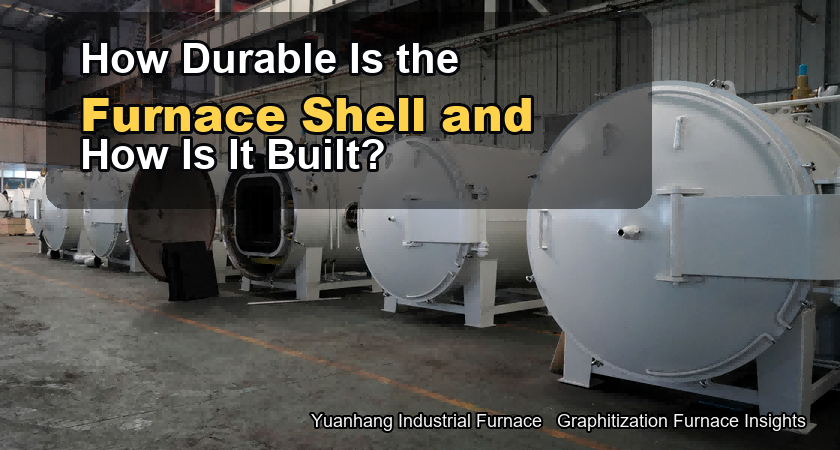
The furnace shell adopts a double-layer 304 stainless steel structure. The choice of 304 stainless steel wasn't arbitrary-this material is corrosion-resistant, strong, and weldable, having withstood years of rigorous testing in industrial environments, consistently performing reliably in food and chemical equipment. Under conditions of alternating high temperatures, vacuum, and varying atmospheres, 304 stainless steel withstands the test.
Two Major Advantages of Double-Layer Water Cooling
What the source article emphasizes
The Chinese source focuses on practical furnace selection and operation, not on a simple word-for-word product description. The important point is to understand how each specification affects real batch quality, operating cost, maintenance, and safety.
- Material Selection: 304 Stainless Steel
- 2?? Long-term structural stability
- Safety significance: The last physical barrier
Key technical points
- Use vacuum mainly for degassing, impurity removal, and low-temperature process stages.
- At very high temperatures, slight positive argon pressure can suppress graphite sublimation and prevent oxidation.
- The furnace control logic should make atmosphere switching repeatable rather than depending on operator memory.
- Leak checking before heating is essential when processing high-value graphite or carbon materials.
- Water-cooled flanges and suitable O-rings help keep sealing parts below their thermal aging limit.
- A small air leak can oxidize the batch, so sealing design and maintenance records should be part of acceptance.
- Cooling water should be monitored by flow, pressure, and temperature, not only by pump running status.
- Independent circuits are preferred for the shell, induction coil, power cabinet, and key electrical components.
Engineering interpretation for overseas buyers
The circulating cooling water flows between the two steel plates, carrying away all the heat lost through the insulation layer. In actual operation, the outer surface temperature of the furnace shell is controlled below 50 °C, far below the national standard limit of 60-70 °C for preventing burns. Workshop operators can work in short sleeves in summer without getting burned if they accidentally touch the furnace shell, ensuring safety inspections are passed easily year after year.
Cooling water not only lowers the temperature, but more importantly, it reduces thermal stress.
With a constant furnace shell temperature, the steel will not repeatedly expand and contract, welds will not crack, and flanges will not deform. I've seen furnaces that have been used for twelve years; when disassembled for inspection, the furnace shell looks brand new.
In the event of extreme conditions inside the furnace (overheating or abnormal damage to the insulation layer), the double-layer water-cooled structure can still maintain its structural integrity and will not deform or crack in a short time,
For an English industrial furnace website, this topic should be presented in a way that helps the reader make a specification decision. That means connecting the furnace feature with material behavior, production rhythm, utility conditions, acceptance testing, and long-term maintenance.
Specification and acceptance checklist
- Use vacuum mainly for degassing, impurity removal, and low-temperature process stages.
- At very high temperatures, slight positive argon pressure can suppress graphite sublimation and prevent oxidation.
- The furnace control logic should make atmosphere switching repeatable rather than depending on operator memory.
- Leak checking before heating is essential when processing high-value graphite or carbon materials.
- Water-cooled flanges and suitable O-rings help keep sealing parts below their thermal aging limit.
- A small air leak can oxidize the batch, so sealing design and maintenance records should be part of acceptance.
- Cooling water should be monitored by flow, pressure, and temperature, not only by pump running status.
- Independent circuits are preferred for the shell, induction coil, power cabinet, and key electrical components.
Questions to confirm before ordering
- What material will be treated, and what quality indicators must be reached after graphitization?
- What temperature curve, holding time, atmosphere, vacuum level, cooling method, and loading density are required?
- Which data will be recorded for each batch, and which acceptance tests will prove stable performance?
- Which spare parts, consumables, alarms, and maintenance checks are needed for long-term operation?
Engineering takeaway
A graphitization furnace should be specified as a complete high-temperature process system. When the buyer defines the material, process window, utilities, safety logic, and acceptance method clearly, the furnace is easier to operate, easier to troubleshoot, and more reliable in repeated production.



