



How Furnace Shell Temperature Stays Safe During Operation
Is the furnace shell temperature high? The furnace shell temperature is ≤45 °C, mainly due to the three major technical means behind the distinct hot and cold conditions
The furnace chamber is 3000 degrees Celsius, where the furnace fire is at its peak; the outside of the furnace shell is no more than 45 degrees Celsius, keeping it cool and comfortable. This contrast between "ice and fire" is one of the most interesting aspects of graphitization furnace design. Many customers who visit for the first time can't help but reach out and touch the furnace shell-after touching it, they usually nod and say, "It's definitely not hot."
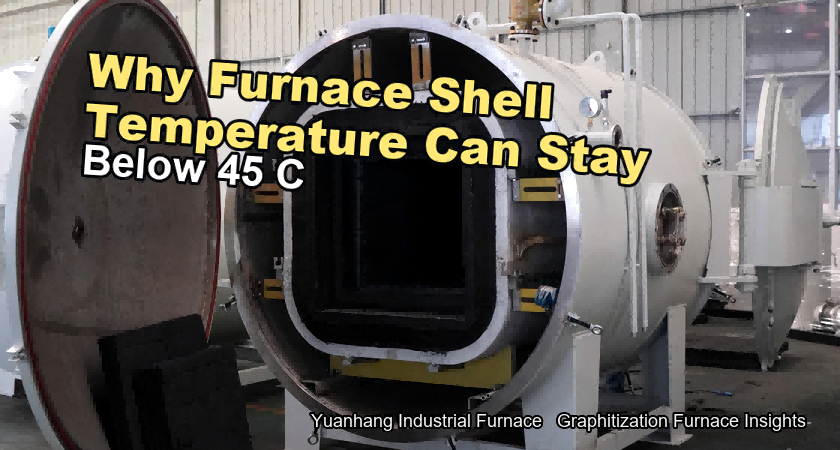
This effect is achieved through the combined effect of three major technical means.
We implement the GB/T 18110-2017 "Safety of Industrial Furnaces and Related Process Equipment" standard, with a general limit of 60-70 °C for burn prevention. Our target is below 45 °C, significantly lower than the national standard. In summer, workshop temperatures are already high; if the furnace shell is also scalding hot, it will be unbearable for operators. New operators lack safety awareness, and the consequences of 45 °C and 70 °C are vastly different.
What the source article emphasizes
The Chinese source focuses on practical furnace selection and operation, not on a simple word-for-word product description. The important point is to understand how each specification affects real batch quality, operating cost, maintenance, and safety.
- Standard: Stricter than National Standard
- Method 1: Double-Layer Water-Cooled Furnace Shell
Key technical points
- At about 3000 °C, stable power, high-purity argon, low dew point, and reliable cooling must work as one system.
- For high-purity graphite work, confirm oxygen and moisture control before loading valuable material.
- Nitrogen should not be treated as a simple substitute for argon in ultra-high-temperature graphite service.
- Leak checking before heating is essential when processing high-value graphite or carbon materials.
- Water-cooled flanges and suitable O-rings help keep sealing parts below their thermal aging limit.
- A small air leak can oxidize the batch, so sealing design and maintenance records should be part of acceptance.
- Cooling water should be monitored by flow, pressure, and temperature, not only by pump running status.
- Independent circuits are preferred for the shell, induction coil, power cabinet, and key electrical components.
Engineering interpretation for overseas buyers
Circulating cooling water continuously flows between the double-layer furnace shell, carrying away all the heat dissipated through the insulation layer from the furnace chamber. The insulation layer itself has a very low thermal conductivity, so the amount of heat transmitted is minimal, and the cooling water is more than sufficient to remove this heat.
The furnace shell temperature is consistently maintained below 45 °C, even when the furnace reaches its maximum operating temperature.
The furnace interior employs a multi-layer graphite felt insulation structure. Graphite felt has extremely low thermal conductivity, resulting in better insulation performance at high temperatures. Heat is conducted from the center of the furnace outwards, passing through layer after layer of graphite felt, with each layer retaining the majority of the heat. By the time the heat reaches the edge of the outermost insulation layer, it is almost depleted. Preventing heat loss allows the furnace temperature to rise, achieving two goals at once.
While overall temperature control is good, localized areas such as near the observation window, flange connections, and electrode leads may experience higher temperatures. Adding
For an English industrial furnace website, this topic should be presented in a way that helps the reader make a specification decision. That means connecting the furnace feature with material behavior, production rhythm, utility conditions, acceptance testing, and long-term maintenance.
Specification and acceptance checklist
- At about 3000 °C, stable power, high-purity argon, low dew point, and reliable cooling must work as one system.
- For high-purity graphite work, confirm oxygen and moisture control before loading valuable material.
- Nitrogen should not be treated as a simple substitute for argon in ultra-high-temperature graphite service.
- Leak checking before heating is essential when processing high-value graphite or carbon materials.
- Water-cooled flanges and suitable O-rings help keep sealing parts below their thermal aging limit.
- A small air leak can oxidize the batch, so sealing design and maintenance records should be part of acceptance.
- Cooling water should be monitored by flow, pressure, and temperature, not only by pump running status.
- Independent circuits are preferred for the shell, induction coil, power cabinet, and key electrical components.
Questions to confirm before ordering
- What material will be treated, and what quality indicators must be reached after graphitization?
- What temperature curve, holding time, atmosphere, vacuum level, cooling method, and loading density are required?
- Which data will be recorded for each batch, and which acceptance tests will prove stable performance?
- Which spare parts, consumables, alarms, and maintenance checks are needed for long-term operation?
Engineering takeaway
A graphitization furnace should be specified as a complete high-temperature process system. When the buyer defines the material, process window, utilities, safety logic, and acceptance method clearly, the furnace is easier to operate, easier to troubleshoot, and more reliable in repeated production.



