



High-Temperature Graphitization of C/C Composite Materials
Carbon-carbon (C/C) composites are composite materials with carbon fiber as the reinforcement and carbon matrix as the matrix. They possess excellent properties such as high temperature resistance, low density, and high specific strength, and have important applications in aerospace, nuclear energy, and other fields.
The preparation of C/C composite materials typically includes:
The graphitization of C/C composite materials has the following characteristics:
Graphitization significantly improves thermal conductivity and abrasion resistance.
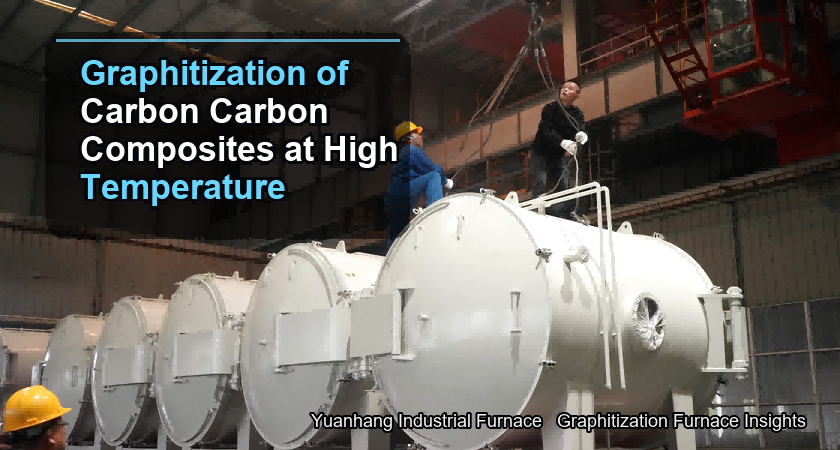
What the source article emphasizes
The Chinese source focuses on practical furnace selection and operation, not on a simple word-for-word product description. The important point is to understand how each specification affects real batch quality, operating cost, maintenance, and safety.
- C/C Composite Material Preparation Process
- Characteristics of Graphitization Process
Key technical points
- Preform Weaving: Weaving carbon fibers into the desired shape
- Densification: CVI or pitch impregnation and carbonization to fill pores
- Graphitization: High-temperature treatment to graphitize the carbon matrix
- High Temperature: Typically 2500-3000 °C, to fully graphitize the carbon matrix
- Structural Evolution: Turbostratic carbon C/C composites are used in:
Engineering interpretation for overseas buyers
The material shrinks during graphitization; uniform shrinkage needs to be controlled.
High-temperature gas-cooled reactor control rods
Single-crystal silicon growth furnace components
Components for single-crystal silicon growth furnaces Key Points: The key to graphitization of C/C composite materials lies in the control of temperature field uniformity and heating rate. Due to the large volume and complex structure of the material, uneven temperature field can lead to internal stress, cracking, and deformation.
For an English industrial furnace website, this topic should be presented in a way that helps the reader make a specification decision. That means connecting the furnace feature with material behavior, production rhythm, utility conditions, acceptance testing, and long-term maintenance.
Specification and acceptance checklist
- Define the effective heating zone instead of using total chamber size as the acceptance basis.
- Write the temperature uniformity value and verification method into the technical agreement.
- Use ceramic temperature rings or an equivalent method when high-temperature mapping cannot be measured directly.
- At about 3000 °C, stable power, high-purity argon, low dew point, and reliable cooling must work as one system.
- For high-purity graphite work, confirm oxygen and moisture control before loading valuable material.
- Nitrogen should not be treated as a simple substitute for argon in ultra-high-temperature graphite service.
- Confirm the process temperature, holding time, atmosphere, loading volume, and product quality indicators before comparing suppliers.
- Ask which indicators will be tested at the factory, which will be tested on site, and which need production verification.
Questions to confirm before ordering
- What material will be treated, and what quality indicators must be reached after graphitization?
- What temperature curve, holding time, atmosphere, vacuum level, cooling method, and loading density are required?
- Which data will be recorded for each batch, and which acceptance tests will prove stable performance?
- Which spare parts, consumables, alarms, and maintenance checks are needed for long-term operation?
Engineering takeaway
A graphitization furnace should be specified as a complete high-temperature process system. When the buyer defines the material, process window, utilities, safety logic, and acceptance method clearly, the furnace is easier to operate, easier to troubleshoot, and more reliable in repeated production.



