



Maintenance Checklist for Longer Graphitization Furnace Life
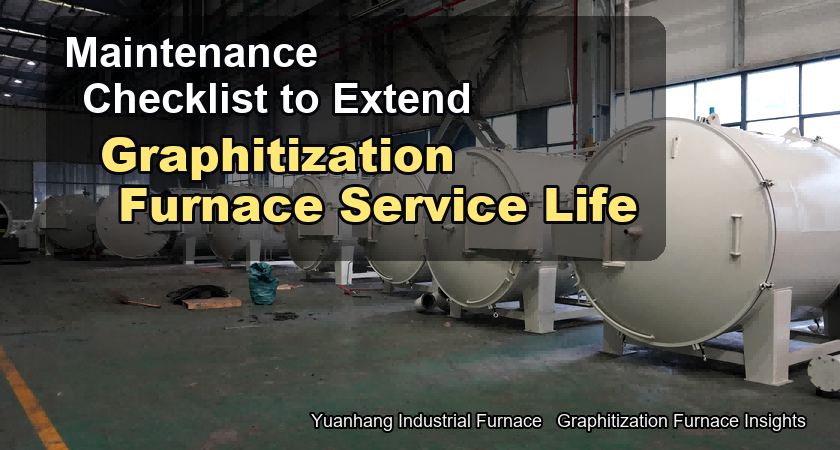
Graphitization furnaces are complex devices involving the coupling of multiple systems, including high temperature, vacuum, electrical, and water cooling. Proper maintenance directly determines the lifespan of the equipment. The following is a periodic maintenance checklist.
? Calibrate the infrared thermometer with a standard thermocouple (on-site comparison)
? Check the vacuum pump oil color and level, replace if necessary.
? Check the appearance of the heating element and insulation material.
What the source article emphasizes
The Chinese source focuses on practical furnace selection and operation, not on a simple word-for-word product description. The important point is to understand how each specification affects real batch quality, operating cost, maintenance, and safety.
- Graphitization Furnace Maintenance: A Practical Checklist to Extend Equipment Life
- Daily Maintenance (Per Shift/Daily)
- Weekly Maintenance
Key technical points
- ? Check if the cooling water flow, pressure, and temperature are normal
- ? Check the protective gas pressure and purity
- ? Check the operation of the power cabinet cooling fan
- ? Clean the dust from the work surface and equipment surface
- ? Record operating parameters and abnormal conditions
- ? Check the condition of the furnace door seal ring for aging and cracks
- ? Check for leaks at all connections in the vacuum pipeline
- ? Clean the inlet and outlet filters
Engineering interpretation for overseas buyers
? Test the safety interlock function (simulate a fault).
? Tighten all mechanical connections (flanges, bolts, etc.).
? Comprehensive overhaul: heating element, insulation material, seals.
? Replace worn parts: O-rings, gaskets, filters.
For an English industrial furnace website, this topic should be presented in a way that helps the reader make a specification decision. That means connecting the furnace feature with material behavior, production rhythm, utility conditions, acceptance testing, and long-term maintenance.
Specification and acceptance checklist
- Compare IGBT and SCR power systems by power factor, harmonic impact, cabinet size, control precision, and lifetime cost.
- If SCR is selected, evaluate whether APF harmonic filtering and extra electrical room space are required.
- Power quality is not only an electricity issue; it can affect instruments, sensors, and production stability.
- Use vacuum mainly for degassing, impurity removal, and low-temperature process stages.
- At very high temperatures, slight positive argon pressure can suppress graphite sublimation and prevent oxidation.
- The furnace control logic should make atmosphere switching repeatable rather than depending on operator memory.
- Leak checking before heating is essential when processing high-value graphite or carbon materials.
- Water-cooled flanges and suitable O-rings help keep sealing parts below their thermal aging limit.
Questions to confirm before ordering
- What material will be treated, and what quality indicators must be reached after graphitization?
- What temperature curve, holding time, atmosphere, vacuum level, cooling method, and loading density are required?
- Which data will be recorded for each batch, and which acceptance tests will prove stable performance?
- Which spare parts, consumables, alarms, and maintenance checks are needed for long-term operation?
Engineering takeaway
A graphitization furnace should be specified as a complete high-temperature process system. When the buyer defines the material, process window, utilities, safety logic, and acceptance method clearly, the furnace is easier to operate, easier to troubleshoot, and more reliable in repeated production.



