
Question: What are the specific requirements for cooling water quality, pressure, temperature, and flow rate? Is the furnace shell single or double-layer water-cooled? Can the surface temperature be controlled below 50°C?
Detailed Answer:
The cooling system acts as the "life support system" for the graphitization furnace, safeguarding its most critical components. Understanding and strictly adhering to its parameters is fundamental for ensuring long equipment lifespan and highly reliable operation.
I. Four Key Parameters for Cooling Water (All Essential)
Water Quality: We recommend using clean softened water or deionized water, with the pH value controlled between 6.7 and 7.5 (neutral). This effectively prevents scale formation and pipeline corrosion. Please refer to our "Cooling Water Quality Standards (3ED-0018B)" for specific guidelines.
Water Pressure: The pressure of the cooling water at the equipment inlet should be stable at 0.1 - 0.2 MPa. Too low pressure results in insufficient flow and poor cooling efficiency; excessively high pressure may damage pipelines or seals.
Water Temperature: The inlet water temperature is generally recommended to be at room temperature, but it must be ensured that it does not fall below 5°C in winter (to prevent freezing) and does not exceed 32°C in summer. High water temperature significantly reduces cooling efficiency.
Flow Rate: This is the most critical parameter. Depending on the specific furnace model and power supply, the required flow rate typically ranges from 10 to 50 m³/h. It is essential to meet the designed flow rate to guarantee adequate cooling capacity.
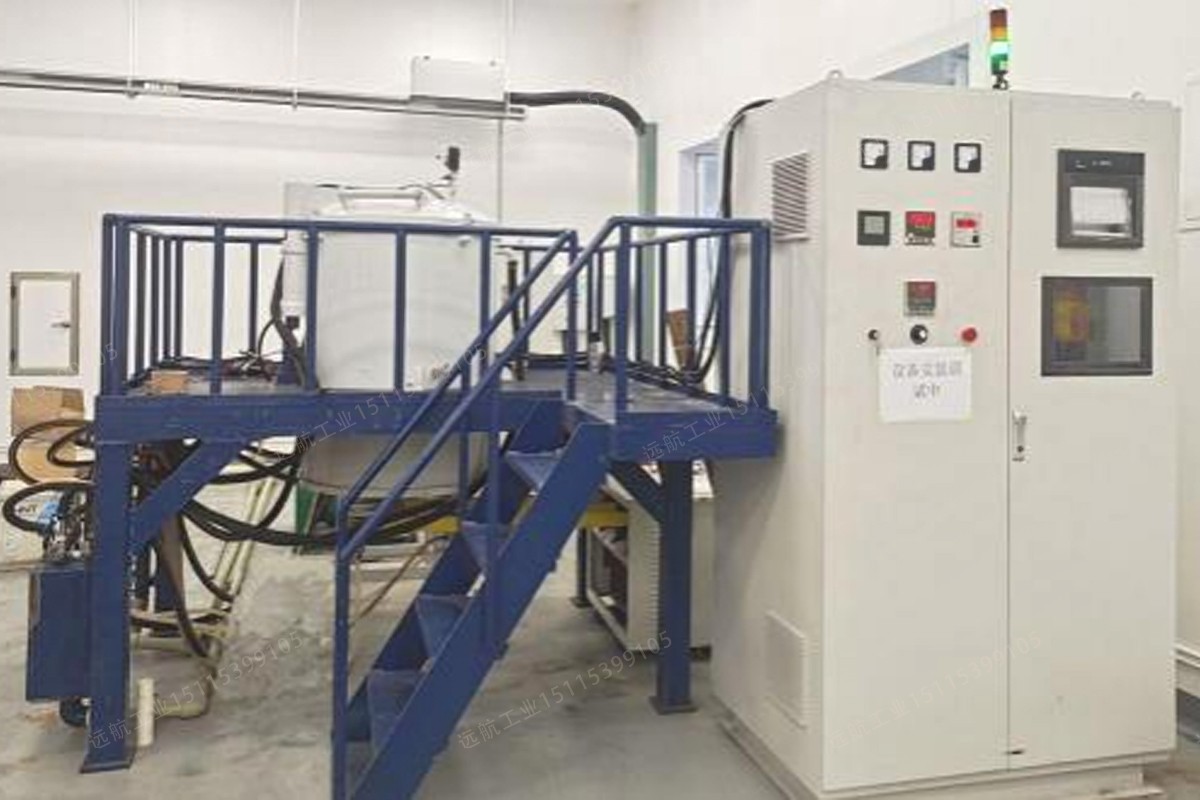
II. Double-Layer Stainless Steel Water-Cooled Furnace Shell: Dual Safety Assurance
Our equipment utilizes a double-layer stainless steel water-cooled furnace shell. Smoothly designed cooling water channels exist between the two steel layers, allowing the cooling water to carry away the substantial heat transferred from inside the furnace.
Advantages: This structure not only effectively prevents furnace shell deformation and cracking but also consistently maintains the outer surface temperature of the furnace shell below 50°C (well below the human burn threshold). This ensures operational safety at the production site and complies with industrial safety standards.
III. Multi-Circuit Independent Cooling
The equipment is typically equipped with multiple independent cooling circuits designed to precisely cool critical components such as the induction coil, capacitors, and medium-frequency power supply. Each circuit features independent flow and temperature monitoring with alarms, ensuring fail-safe operation.
The above technical article is exclusively written by Yuanhang Industrial Furnace Company. Reproduction is prohibited.

Our main business covers a wide range of heat treatment equipment, including various sizes of high-temperature graphitization furnaces ranging from 0 to 3200 degrees Celsius and vacuum furnaces ranging from 0 to 2200 degrees Celsius.


Whatsapp+08615273391550

Emailhejunde@zzyhgyl.com

AddressNo. 518 Hongqi Middle Road, Zhuzhou City, Hunan Province, China
ZhuZhou YuanHang Industrial Furnace Technology Co., Ltd.© 2024 All rights reserved.