


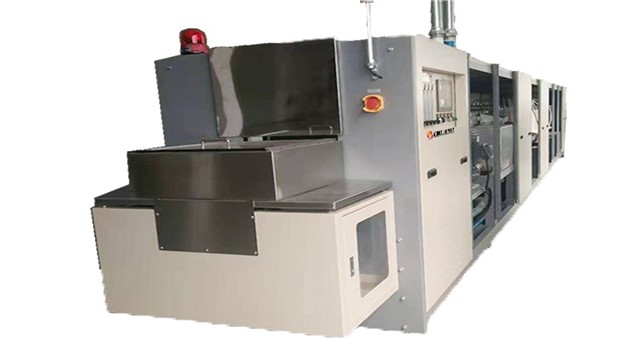
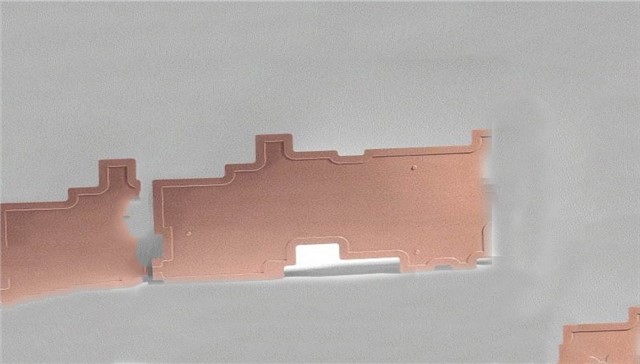
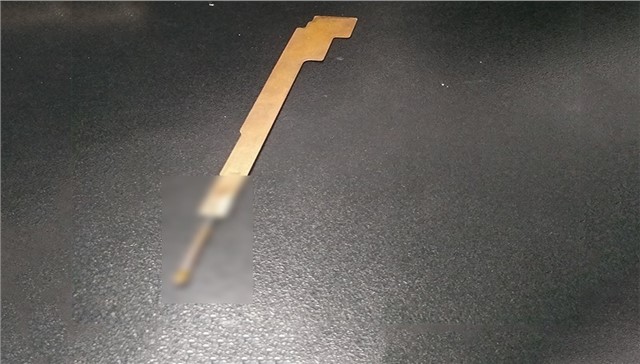
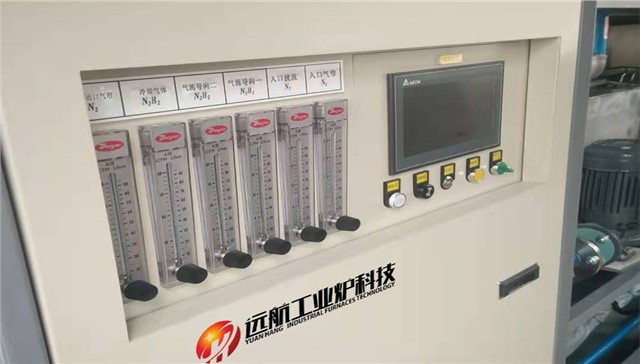
This equipment is a continuous heating furnace suitable for the sintering and brazing of copper-based materials, copper powder, bare plates, or wire mesh used in various vapor chamber (VC) liquid cooling plates. It features a high degree of automation, high sintering yield rate, and excellent reducing properties.
With the rapid development of modern electronic technology and 5G communication technology, various electronic components such as CPUs and GPUs are trending towards higher frequencies, miniaturization, and enhanced performance. Concurrently, performance degradation caused by high heat generation has already emerged in some electronic components. According to literature data, when the CPU operating temperature exceeds its rated operating temperature by 10°C, its reliability decreases by 50%. This indicates that increasing heat flux density has become a key factor restricting the performance of electronic components. High-density heat flux can create "hot spots" on component surfaces, leading to performance degradation and reduced reliability. Thermal stress generated by high temperatures can even cause structural damage to components. Common heat dissipation methods involve transferring concentrated heat flux to a larger area, then dissipating heat to air (air cooling) or liquid (liquid cooling) through forced convection or direct conduction. Currently, as graphite thermal conductive films and graphene heat dissipation films used in smartphones and other equipment become inadequate, most manufacturers are turning to VC ultra-thin liquid cooling plates. Based on our original medium-frequency high-temperature graphitization and carbonization furnaces, our company has developed a dedicated continuous brazing and sintering furnace for VC ultra-thin liquid cooling plates. This furnace is suitable for the continuous brazing and sintering of ultra-thin liquid cooling plates with thicknesses of 0.2-0.8mm, offering advantages such as a high degree of automation, high sintering yield rate, and excellent reducing properties.
|
Working Zone |
idth mm x Height mm |
200X100 |
400X150 |
500X200 |
600X300 |
|
Working Temperature |
℃ |
950 |
950 |
950 |
950 |
|
Temperature Uniformity |
±℃ |
1 |
1 |
1 |
1 |
|
Nitrogen Consumption |
m³/h |
5 |
5 |
7 |
10 |
|
Nitrogen-Hydrogen Mixture Consumption |
m³/h |
2 |
4 |
6 |
6 |
|
Power Consumption |
KW |
40 |
50 |
50 |
80 |
|
Cooling Water |
m³/h |
20 |
20 |
30 |
30 |
|
Heating Zone Length |
Meters |
4 |
4 |
4 |
4 |
|
Reduction Zone Length |
Meters |
2 |
2 |
3 |
5 |
|
Cooling Length |
Meters |
5 |
5 |
5 |
5 |
|
Travel Speed |
mm/min |
10 |
10 |
15 |
20 |
|
注1:The length of each zone and the travel speed are adjustable according to the actual process requirements. |
|||||
|
注2:The working zone width refers to the actual usable width of the high-temperature mesh belt. |
|||||