


Question:If corrosive gases need to be handled, are there any special treatments for the furnace lining or seals?
Detailed Answer:
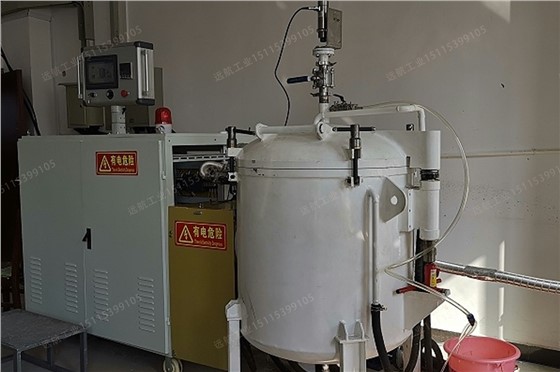
This is a highly professional and important question. When processing certain special materials (such as precursors containing fluorine or chlorine elements), high-temperature pyrolysis may generate corrosive gases, posing a severe challenge to conventional furnace designs. We have a comprehensive set of solutions to address this.
I. Core Defense: Establishing a "Corrosion-Resistant Barrier"
For corrosive atmospheres, standard configurations are not suitable. The core strategy is to establish physical or chemical barriers on components that may come into contact with corrosive gases.
-
Induction Coil Protection:ApplyTeflon (PTFE) spray coating or ceramic coatingto the water-cooled copper induction coil. This coating layer effectively isolates corrosive gases, protecting the expensive coil from erosion.
-
Furnace Shell Inner Wall Protection:Applyhigh-temperature resistant anti-corrosion coatingsto the inner stainless steel wall of the furnace shell to prevent perforation and corrosion damage.
-
II. Seal Upgrades: Blocking Every Leak Path
Standard fluororubber (FKM) O-rings have limited resistance to certain highly corrosive gases. In such cases, we upgrade the seals in critical areas to:
-
Perfluoroelastomer (FFKM):Offers broader chemical resistance compared to standard fluororubber.
-
Flexible Graphite Spiral Wound Gaskets:Used for static seals such as pipe flanges, offering both corrosion resistance and high-temperature tolerance.
-
High-Temperature Alloy Bellows:Used for dynamic seals (e.g., electrode feed-throughs) to achieve a robust metal-to-metal seal.
III. Process and Maintenance Recommendations
-
Enhanced Purging:Thoroughly purge the furnace chamber with inert gas before and after the process cycle to minimize residual corrosive gases.
-
Regular Inspection:Establish a more frequent maintenance inspection schedule, focusing on the condition of coatings and seals.
-
Early Communication:It is essential to explicitly indicate the potential presence of corrosive gases during the initial project discussion phase. This constitutes asignificant design modification, requiring us to undertake targeted development from the ground up, including material selection and structural design.
Core Value:Through material upgrades and specialized design, we can adapt the graphitization furnace to accommodate a wider range of specialized processes. However, this requires the customer to fully disclose process details in advance, enabling us to make corresponding technical preparations and accurate cost assessments.
The above technical article is written by Yuanhang Industrial Furnace Company. Reproduction is prohibited.