


Graphitizing Graphene Precursors from Graphite Oxide
Graphene is a two-dimensional carbon nanomaterial with excellent electrical, thermal, and mechanical properties. The oxidation-reduction method is an important route for the large-scale preparation of graphene, in which high-temperature reduction graphitization is a key process.
The surface of graphite oxide (GO) contains a large number of oxygen-containing functional groups (hydroxyl, epoxy, carboxyl, etc.), which disrupt the sp² conjugated structure of graphene.
The quality of graphene largely depends on the temperature curve design:
The reduction of graphene oxide is not only about removing oxygen-containing functional groups, but more importantly,
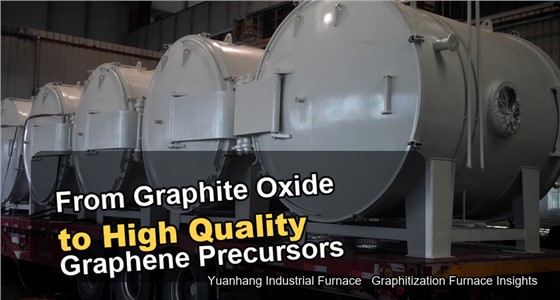
What the source article emphasizes
The Chinese source focuses on practical furnace selection and operation, not on a simple word-for-word product description. The important point is to understand how each specification affects real batch quality, operating cost, maintenance, and safety.
- Graphite Precursor Graphitization: From Graphite Oxide to High-Quality Graphene
- Reduction Mechanism
- Defect Repair
Key technical points
- Low-temperature range (200-500 °C): Carboxyl and hydroxyl groups decompose, releasing CO? and H?O
- Medium-temperature range (500-1000 °C): Epoxy groups decompose, releasing CO
- High-temperature range (1000-3000 °C): Carbon skeleton rearrangement, sp² structure repair
- Heating Rate: Slow heating in the low-temperature range allows for full gas release, preventing material expansion and cracking.
- High-Temperature Holding Time: Higher temperatures and longer holding times result in more complete sp² structure repair.
- Final Temperature: Processing above 2000 °C yields higher quality reduced graphene.
Engineering interpretation for overseas buyers
At high temperatures, carbon atoms gain sufficient energy to rearrange themselves, gradually restoring the perfect hexagonal lattice structure. This process requires sufficiently high temperatures and sufficient time.
Key: The quality of graphene (conductivity, defect density) is closely related to graphitization temperature and time. Temperature profile design is one of the core secrets of graphene fabrication.
For an English industrial furnace website, this topic should be presented in a way that helps the reader make a specification decision. That means connecting the furnace feature with material behavior, production rhythm, utility conditions, acceptance testing, and long-term maintenance.
Specification and acceptance checklist
- At about 3000 °C, stable power, high-purity argon, low dew point, and reliable cooling must work as one system.
- For high-purity graphite work, confirm oxygen and moisture control before loading valuable material.
- Nitrogen should not be treated as a simple substitute for argon in ultra-high-temperature graphite service.
- Heating elements and insulation determine maximum temperature, power consumption, maintenance interval, and batch cost.
- Consumable life depends on peak temperature, atmosphere purity, heating and cooling rate, and material volatility.
- Spare hot-zone parts should be discussed during procurement, not only after the first failure.
- Confirm the process temperature, holding time, atmosphere, loading volume, and product quality indicators before comparing suppliers.
- Ask which indicators will be tested at the factory, which will be tested on site, and which need production verification.
Questions to confirm before ordering
- What material will be treated, and what quality indicators must be reached after graphitization?
- What temperature curve, holding time, atmosphere, vacuum level, cooling method, and loading density are required?
- Which data will be recorded for each batch, and which acceptance tests will prove stable performance?
- Which spare parts, consumables, alarms, and maintenance checks are needed for long-term operation?
Engineering takeaway
A graphitization furnace should be specified as a complete high-temperature process system. When the buyer defines the material, process window, utilities, safety logic, and acceptance method clearly, the furnace is easier to operate, easier to troubleshoot, and more reliable in repeated production.