


How to Benchmark Energy Efficiency in Graphitization Furnaces
Customers often ask: Is your graphitization furnace energy-saving? This question is actually difficult to answer directly. "Energy saving" is a relative concept, and a scientific benchmarking method is needed to give a meaningful conclusion.
The following indicators should be used to assess the energy efficiency of a graphitization furnace:
When benchmarking, it is essential to ensure that the comparison conditions are consistent; otherwise, the results are meaningless.
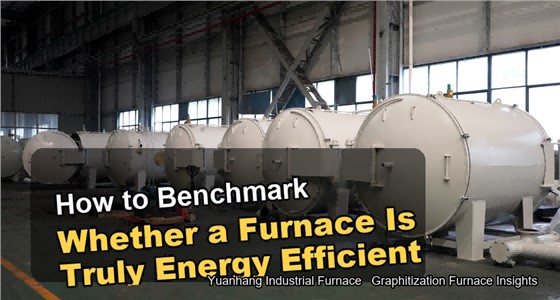
Conclusion: To evaluate the energy efficiency of a graphitization furnace, scientific indicators and comparisons under the same conditions are necessary. After identifying the gaps, improvements should be made in three areas: insulation, furnace loading rate, and curve optimization.
What the source article emphasizes
The Chinese source focuses on practical furnace selection and operation, not on a simple word-for-word product description. The important point is to understand how each specification affects real batch quality, operating cost, maintenance, and safety.
- Scientific Benchmarking Indicators
- Benchmarking Prerequisite: Comparison under the same conditions
- If energy efficiency is found to be low, improvements can be made in three directions
Key technical points
- Unit Product Power Consumption (kWh/kg): How many kilowatt-hours of electricity are consumed to process one kilogram of product. This is the most direct energy efficiency indicator.
- Production capacity per unit time (kg/h): How many kilograms of product can be processed per hour. Reflecting Equipment Utilization Rate
- Annual Comprehensive Energy Efficiency: The annual average energy efficiency considering factors such as equipment utilization rate and maintenance downtime.
- Same Furnace Type: Laboratory furnaces and industrial furnaces cannot be directly compared.
- Similar Processes: Different temperatures and holding times result in significant differences in power consumption.
- Similar Materials: Different materials have significantly different specific heat capacities and graphitization temperatures.
- Similar Utilization Rates: The average energy efficiency differs significantly between intermittent and continuous production.
- Improving Insulation Performance: Replace aging insulation materials to reduce heat loss
Engineering interpretation for overseas buyers
For an English industrial furnace website, this topic should be presented in a way that helps the reader make a specification decision. That means connecting the furnace feature with material behavior, production rhythm, utility conditions, acceptance testing, and long-term maintenance.
Specification and acceptance checklist
- Heating elements and insulation determine maximum temperature, power consumption, maintenance interval, and batch cost.
- Consumable life depends on peak temperature, atmosphere purity, heating and cooling rate, and material volatility.
- Spare hot-zone parts should be discussed during procurement, not only after the first failure.
- Loading density must be balanced with temperature uniformity and gas flow.
- Fixtures, spacing, and product orientation can affect both quality and cycle time.
- A loading plan should be tested with real products before it becomes the production standard.
- Energy tracking should be recorded by furnace, batch, recipe, and product type.
- The suitable heating curve is not always the fastest curve or the slowest curve; it should be proven by data.
Questions to confirm before ordering
- What material will be treated, and what quality indicators must be reached after graphitization?
- What temperature curve, holding time, atmosphere, vacuum level, cooling method, and loading density are required?
- Which data will be recorded for each batch, and which acceptance tests will prove stable performance?
- Which spare parts, consumables, alarms, and maintenance checks are needed for long-term operation?
Engineering takeaway
A graphitization furnace should be specified as a complete high-temperature process system. When the buyer defines the material, process window, utilities, safety logic, and acceptance method clearly, the furnace is easier to operate, easier to troubleshoot, and more reliable in repeated production.