


Graphitization Furnaces for EDM Graphite Electrodes
Electrical discharge machining (EDM) is a non-traditional machining method widely used in mold manufacturing. Graphite is the main material for EDM electrodes, offering advantages such as ease of machining, low wear, and cost-effectiveness.
Advantages of graphite electrodes compared to copper electrodes:
Graphitization temperature is typically between 2500-3000 °C. Grain size and isotropy are adjusted by controlling graphitization conditions.
The mold manufacturing industry is the largest user of graphite for EDM electrodes:
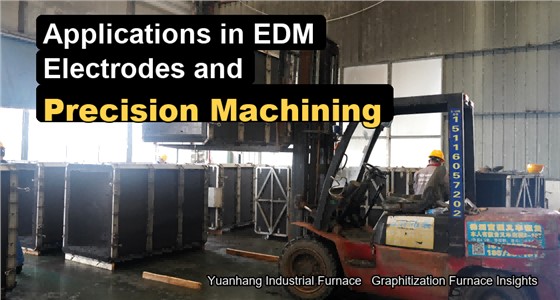
What the source article emphasizes
The Chinese source focuses on practical furnace selection and operation, not on a simple word-for-word product description. The important point is to understand how each specification affects real batch quality, operating cost, maintenance, and safety.
- Application of Graphitization Furnaces in Electrical Discharge Machining Electrodes
- Advantages of Graphite Electrodes
- Graphitization requirements for graphite used in EDM electrodes
- Market Applications
Key technical points
- Easy to process: Graphite can be milled and ground, making it easy to process complex shapes.
- Lightweight: Its density is only 1/4 that of copper, making electrode replacement convenient.
- Low loss: The loss rate of high-quality graphite electrodes is lower than that of copper.
- Low cost: The cost of graphite materials is much lower than that of copper.
- Good thermal stability: It does not deform at high temperatures.
- High purity: Reduces abnormal discharge caused by impurities
- Fine grains: Fine grains result in high surface finish
- Isotropic: Uniform loss in all directions ensures high machining accuracy
Engineering interpretation for overseas buyers
Key Points: The key to graphite for EDM electrodes is fine grain size and isotropy. The temperature profile and holding time of the graphitization process directly affect grain growth and require precise control.
For an English industrial furnace website, this topic should be presented in a way that helps the reader make a specification decision. That means connecting the furnace feature with material behavior, production rhythm, utility conditions, acceptance testing, and long-term maintenance.
Specification and acceptance checklist
- At about 3000 °C, stable power, high-purity argon, low dew point, and reliable cooling must work as one system.
- For high-purity graphite work, confirm oxygen and moisture control before loading valuable material.
- Nitrogen should not be treated as a simple substitute for argon in ultra-high-temperature graphite service.
- Heating elements and insulation determine maximum temperature, power consumption, maintenance interval, and batch cost.
- Consumable life depends on peak temperature, atmosphere purity, heating and cooling rate, and material volatility.
- Spare hot-zone parts should be discussed during procurement, not only after the first failure.
- A new furnace should be purified before high-purity products are loaded.
- Moisture, oil, machining residue, and background contaminants can remain inside a new hot zone.
Questions to confirm before ordering
- What material will be treated, and what quality indicators must be reached after graphitization?
- What temperature curve, holding time, atmosphere, vacuum level, cooling method, and loading density are required?
- Which data will be recorded for each batch, and which acceptance tests will prove stable performance?
- Which spare parts, consumables, alarms, and maintenance checks are needed for long-term operation?
Engineering takeaway
A graphitization furnace should be specified as a complete high-temperature process system. When the buyer defines the material, process window, utilities, safety logic, and acceptance method clearly, the furnace is easier to operate, easier to troubleshoot, and more reliable in repeated production.